
Laura Dottori-Attanasio
Class of 2026
- President and CEO Element Fleet Management
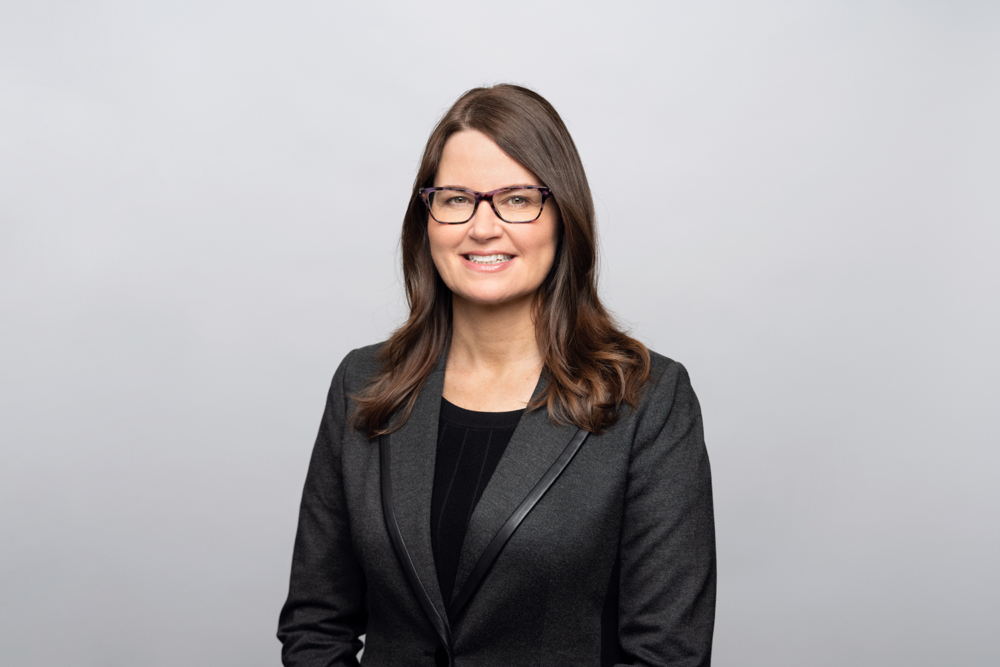
Never compromise your values. Not for a job. Not for money.
Laura Dottori-Attanasio was born in Timmins, Ontario, and raised in the small Quebec town of Temiskaming, a French-speaking community of about two thousand people. The daughter of immigrant families, French and Irish on her mother’s side, Italian on her father’s, Laura grew up in a household grounded in her parents’ values: Work hard. Take accountability. Be useful. Look after others.
Cadillac was small enough that Laura’s classmates were the same thirty-one children from kindergarten through the end of high school. There were only seven girls, which meant, as she puts it, that she spent her school years as “the odd man out.” Shy and introverted, Laura often felt more comfortable on her own than in a crowd.
What she learned from those years, she says, was a form of resilience: “You have to learn to love yourself first and be comfortable with yourself. Then at some point you have to learn to be confident in yourself enough to step out of your comfort zone.”
Her parents believed education was a way forward, and a path out of the small working-class community. Her father had been the only one of his siblings who was able to attend university. In the Dottori household, university was not a question. It was a given.
CAREER
Laura chose to attend Western University without a clear idea of where her studies would take her. She initially imagined becoming a veterinarian, until she realized she was less enthusiastic about the blood involved. She thought about law. She landed on finance and economics, still uncertain where it might lead. The harder part was the cultural shift.
Cadillac had one hardware store, and the Sears catalogue at the back served as the town’s clothing supplier. Laura ordered her first-year wardrobe from that catalogue and packed it into a large blue trunk that arrived on the Western lawn looking like something out of another decade.
Western felt like a different world to Laura. She was mocked for being a French-speaking Italian and made to feel out of place because of her small-town background. She begged her parents to take her home. They refused. That refusal, though painful at the time, is one Laura now names as one of the most character-building moments of her life. “It was an incredibly unpleasant experience,” she says. “But it allowed me to learn to stand up for myself. It gave me a little more strength.”
After university, Laura returned home and tried to start a business with her brother. She quickly learned two things: she needed to better understand the numbers, and she and her brother were not meant to be business partners. Laura then joined an accounting firm to better understand the numbers, a move that eventually set her on the path to a career in finance.
From there she moved to the National Bank of Canada in Montreal, and then to CIBC, where she spent fourteen years working her way through a series of increasingly senior roles. She never planned to become a banker. And she certainly never imagined a career as a chief executive officer. What she did do, over and over, was raise her hand for the next assignment. “I kept thinking, well, I’ll give this a shot. And if it fails, so be it. I will have given it a shot.”
In February 2023, Laura joined Element Fleet Management as President, becoming President and Chief Executive Officer that May. Element is one of the world’s leading fleet management companies, managing the vehicles that power the operations of many of the world’s largest organizations. Under Laura’s leadership, Element has become a purpose-driven company. Its stated purpose, to move the world through intelligent mobility, was built by the team itself. “It is our why to what we do every day,” Laura says. “It’s why we come to work.”
Laura has been named one of the Top 100 Most Powerful Women in Canada by the Women’s Executive Network, and inducted into their Hall of Fame. She and her husband have established a scholarship at the University of British Columbia to help students from underrepresented backgrounds access both a university education and the network and mentorship that turn an education into a career. It is a gap she has watched close in on capable young people over her time in business. “It allows others to see that this is possible,” she says of her own visibility. And of her scholarship, “It is about levelling the playing field so that other people who weren’t as fortunate can actually have a shot.”
WHAT I'VE LEARNED
Laura defines success not by title, and not by income. “I define it by the positive change you can have in someone’s life.” Her own purpose, she says, is to help others recognize their full potential.
Family is also at the centre of how Laura thinks about success. She and her husband have children, including a child with down syndrome, and when asked what has brought her the greatest happiness over her career and her life, her answer is immediate: “My family and my dogs.”
Her advice to the next generation of scholars is offered gently. “When you’re in your twenties, you’re not really taking advice, because you think you know everything. So, I try not to give advice, other than to put yourself first. Believe in yourself. Push yourself. Surround yourself with people who believe in you. The rest will come.”
She encourages scholars to lean into the mentorship the Association makes possible, and to keep stepping into things that feel too hard. “The uncomfortable is only uncomfortable until you figure it out. Then the uncomfortable becomes comfortable. It’s temporary. Stick with it.”
Laura first learned about the Horatio Alger Association when she saw Michael Bublé receive an award. Curious, she looked into the organization and was struck by its focus on people who have faced adversity. What resonates with her most is that its members have not only achieved success in their own lives, but continue to give back to their communities and create opportunities for others.
That mission closely reflects Laura’s own belief in levelling the playing field. She sees particular value in the mentorship and network available to Horatio Alger Scholars.
Throughout her own career, mentorship, networking, support and encouragement helped her step outside her comfort zone and continue to grow. She encourages scholars to take full advantage of that same support and the people around them who can believe in them, challenge them and help them move forward.
Above all else, Laura returns to the lesson she learned when she chose her values over her job. “It is important to be able to live with yourself. You spend more time with yourself than anyone else. You should never compromise your values. Not for a job. Not for money. I would never sacrifice my values.”