
Glenn Cooke
Class of 2026
- CEO Cooke Inc.
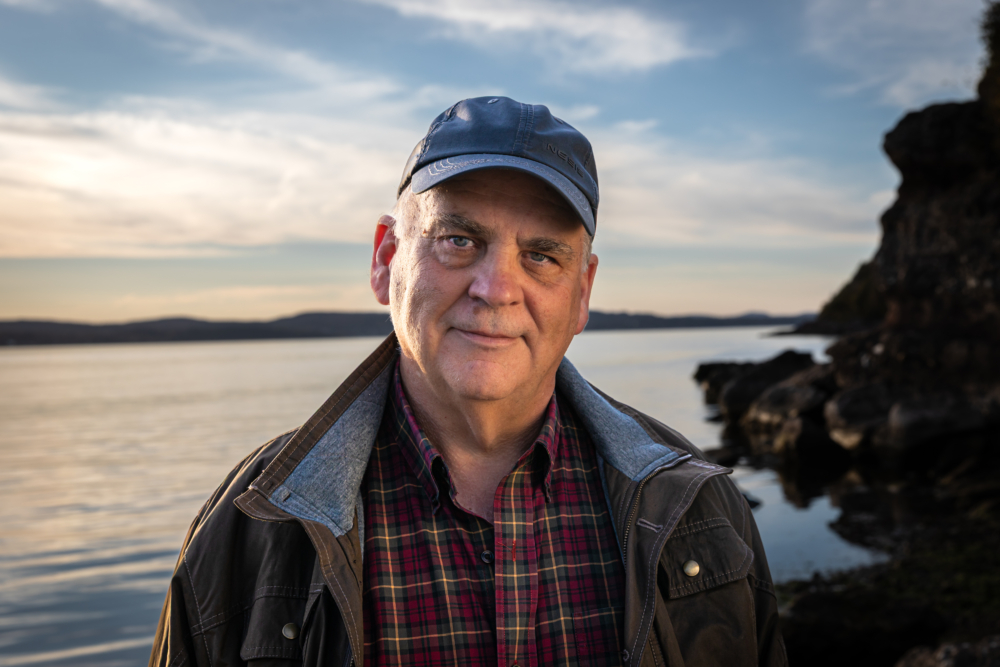
You get up in the morning and you run and you run and you run and you never stop running.
Glenn Cooke was born in Blacks Harbour, a small fishing community in Charlotte County, New Brunswick. It was a company town: the company owned the fish plant, the houses, the stores, the movie theatre and the gas station. Glenn remembers a community where people looked after their own, but also one where nearly every part of life revolved around a single business.
His father was a marine mechanic for Connors Brothers and an exceptionally hard worker. After finishing his regular shifts, he often helped independent fishermen repair their boats. Sometimes they did not have the money to pay him and would give him lobster or fish instead. His father helped anyway. He knew they needed to get back on the water.
That example stayed with Glenn. He grew up in a Christian home where giving back was simply something his family did. “Dad was always giving something to someone in need or looking after somebody,” he recalls.
The family later moved to St. George, where Glenn spent his teenage years. He started working when he was 12 or 13, first cutting timber for the local fishing industry and then spending his summers working in fish plants.
From an early age, Glenn showed a propensity for business. As a boy, he sold eggs from his great-uncle’s farm as well as miniature chairs he made from clothespins.
By high school, he had a clear sense of what he wanted to do. Growing up around entrepreneurs had influenced him. So had growing up in a town where one company controlled so much of daily life.
“I always had this big determination that I wanted to build a business and not work for someone else,” he says.
Neither of Glenn’s parents had attended university. His father had left school after Grade 7 when his own father suffered a heart attack. Glenn’s parents wanted something different for their children.
Glenn was accepted to university and offered a scholarship. However, he turned everything down. At 18, he was determined to start a business and, as he puts it, “set the world on fire.”
CAREER
His first attempt did not go as planned. Glenn went into business buying, selling, and processing seafood. He was young, ambitious, and convinced he knew enough to make it work.
He did not.
The business failed. Glenn lost his shirt and damaged his reputation with the banks. People who had been uncertain about his plans now had reason to believe they had been right.
Glenn calls the experience his “college education,” although he is quick to point out that he would not recommend it. “You want something to humble you? Get yourself a failure,” he says.
There were lessons about balance sheets, income statements and banking relationships. But there were harder lessons too. “It’s tough when you have someone call for a bill you can’t pay,” he says. “It’s tough when you know you’ve let people down.”
Not everyone lost faith in him. A close family friend, someone Glenn describes as a special aunt, had supported his decisions. Even after his business failed, she kept believing he could accomplish something.
That mattered. Glenn remembers how quickly failure separated the people who truly believed in him from those who had only been willing to give him the benefit of the doubt. He was determined to succeed.
Atlantic salmon aquaculture was new in New Brunswick, and a provincial program gave Glenn an opening. His own reputation damaged with the banking community, his father and brother joined him in the venture.
The family built two wooden cages and started with 5,000 fish. That was the beginning of Cooke Inc.
As the industry grew, so did Cooke. They invested back into the business and began buying operations from others. A major turning point came later when three multinational competitors, two Norwegian companies and one large Canadian company, ran into financial trouble. Cooke acquired their operations and quadrupled in size within about a year. Glenn called it a “qualified bet.”
From there, Cooke expanded internationally, first into Chile and then into markets around the world. Glenn credits much of that growth to the people who joined him along the way.
“It’s not all me,” he says. “It’s the team. It’s the people who built us globally that’s made it what it is. It’s all about people.”
Today, Cooke Inc. is the world’s largest private family-owned seafood and aquaculture company, with more than 15,000 employees and operations around the world. Yet its global headquarters remain in New Brunswick. For Glenn, growing internationally has never meant leaving Atlantic Canada behind.
The company also continues to operate and invest in the kinds of small rural and coastal communities Glenn knows well. “When we grow around the world, we grow in New Brunswick, we grow in Atlantic Canada,” he says.
WHAT I'VE LEARNED
Glenn has not forgotten what it felt like to fail.
It taught him to understand the numbers, choose the right people, and appreciate the responsibility that comes with others depending on you. It also made him determined not to let failure decide what happened next.
His advice to young people reflects that experience. “Get rid of guardrails, the sky’s the limit,” he says. “Dream big, you should do things big.”
He has little patience for the old advice that you must walk before you run.
“You get up in the morning, and you run, and you run, and you run, and you never stop running.”
At the same time, Glenn has become a strong advocate for post-secondary education. Looking back, he jokes that he might have been much further ahead if he had learned some of those lessons in a classroom rather than through failure, or the school of hard knocks, as he puts it. He wants young people to pursue education and knowledge that prepare them to take calculated risks without having to learn every lesson the hard way.
That belief is part of what draws him to the Horatio Alger Association. Glenn has seen talented people who needed someone to offer them a hand at the right moment. He wonders what some of them might have accomplished if that help had come earlier. Through the Association, he sees an opportunity to help young people take a step they might not otherwise be able to take and perhaps become future industry and global leaders.
He also hopes those scholars will one day do the same for someone else. “Once you get your accomplishments, when you’ve gotten your career, then you’ve got to give back,” he says. “There should be perpetual giving back to ensure we can bring others to that level.”
For Glenn, giving back is something he learned before success, watching his father help fishermen get their boats back on the water, whether they could afford to pay him or not.
And it remains part of how he thinks about Cooke today. “Giving back is not a choice. It’s our responsibility.”